Introduction
As dogs grow older, their behavior, sleeping habits, and daily routines may change. Some senior dogs become confused, forget familiar routines, or remain awake throughout the night. These changes can be signs of Canine Cognitive Dysfunction (CCD), a progressive condition that affects brain function in aging dogs.
Canine Cognitive Dysfunction resembles certain aspects of dementia in humans. It can affect memory, awareness, learning, and sleep patterns. Although aging cannot be stopped, appropriate veterinary care and environmental changes can help dogs remain comfortable.
Understanding Canine Cognitive Dysfunction is essential for recognizing early symptoms and providing suitable support. With patience, consistent routines, and professional guidance, owners can improve their senior dogs’ quality of life.
What Is Canine Cognitive Dysfunction?
Canine Cognitive Dysfunction is a neurodegenerative condition associated with aging. It affects how dogs process information, remember familiar experiences, and respond to their surroundings. Symptoms often develop gradually and may become more noticeable over time.
The condition can affect dogs of different breeds and sizes. However, the likelihood generally increases as dogs enter their senior years.
CCD is not simply normal aging. While an older dog may move more slowly, persistent confusion or significant behavioral changes deserve veterinary attention.

Common Signs of Cognitive Dysfunction in Dogs
Dogs with Canine Cognitive Dysfunction may show changes in their everyday behavior. Some become disoriented in familiar rooms, while others appear less interested in activities they previously enjoyed.
An affected dog might stare at walls, become stuck behind furniture, or forget how to reach a familiar door. Some dogs seek reassurance more frequently or become unusually anxious when separated from their owners.
Changes in social behavior are also possible. A previously affectionate dog may become withdrawn, while another may demand more attention.
Sleep disturbances are particularly common. Dogs may sleep for much of the day but become restless, vocal, or confused during the night.
How Canine Cognitive Dysfunction Affects Sleep Cycles
Healthy dogs generally follow predictable sleeping and waking patterns. However, aging and cognitive changes can disrupt their normal circadian rhythms.
The circadian rhythm is the body’s internal clock. It helps regulate sleep, wakefulness, and other daily biological processes.
In dogs with Canine Cognitive Dysfunction, these rhythms may become less organized. As a result, nighttime sleep can become fragmented, and daytime sleeping may increase.
Why Senior Dogs Become Restless at Night
A senior dog with CCD may wake repeatedly, pace around the house, or bark without an obvious reason. Some dogs wander into unfamiliar corners or appear unable to settle comfortably.
These behaviors can be related to confusion, anxiety, and disrupted sleep-wake cycles. Reduced activity during the day may also contribute to nighttime restlessness.
However, cognitive dysfunction is not the only possible explanation. Arthritis, urinary problems, digestive discomfort, vision loss, and other medical conditions can interrupt sleep.
Therefore, owners should arrange a veterinary examination before assuming that nighttime restlessness results from dementia.
Daytime Sleeping and Nighttime Wakefulness
Many older dogs naturally sleep more than younger dogs. Nevertheless, a significant change in their usual schedule deserves attention.
A dog that naps excessively throughout the day may have difficulty settling at night. Cognitive changes can also disturb the normal balance between daytime alertness and nighttime rest.
Gentle daytime activities, exposure to natural daylight, and consistent feeding schedules may help reinforce a healthier routine. Owners should avoid deliberately keeping an exhausted or uncomfortable dog awake.
How to Manage Canine Cognitive Dysfunction at Home
Although Canine Cognitive Dysfunction has no established cure, supportive care can make daily life easier. The most effective approach combines veterinary guidance, predictable routines, and a comfortable living environment.
Establish a Consistent Daily Routine
Predictability helps senior dogs feel secure. Try to maintain regular times for feeding, walking, bathroom breaks, play, and bedtime.
Sudden changes can increase confusion for dogs experiencing cognitive difficulties. Therefore, introduce new activities gradually whenever possible.
A calm evening routine may include a short walk, a bathroom break, gentle interaction, and a comfortable sleeping area. Repeating these activities can help your dog anticipate what happens next.
Create a Safe and Familiar Environment
Dogs experiencing cognitive dysfunction may struggle to navigate familiar surroundings. Rearranging furniture frequently can increase confusion.
Keep food bowls, water, bedding, and bathroom access in predictable locations. Use night-lights in hallways or near sleeping areas to help dogs navigate after dark.
Prevent access to steep stairs, swimming pools, balconies, and other potentially dangerous spaces. Baby gates and nonslip flooring may provide additional protection.
If your dog becomes disoriented, guide them calmly toward a familiar area. Avoid scolding them for accidents or unusual behavior because these actions may increase anxiety.
Encourage Gentle Physical and Mental Activity
Appropriate activity can support mobility, engagement, and general well-being. Short walks, supervised sniffing opportunities, and simple interactive games may help senior dogs remain stimulated.
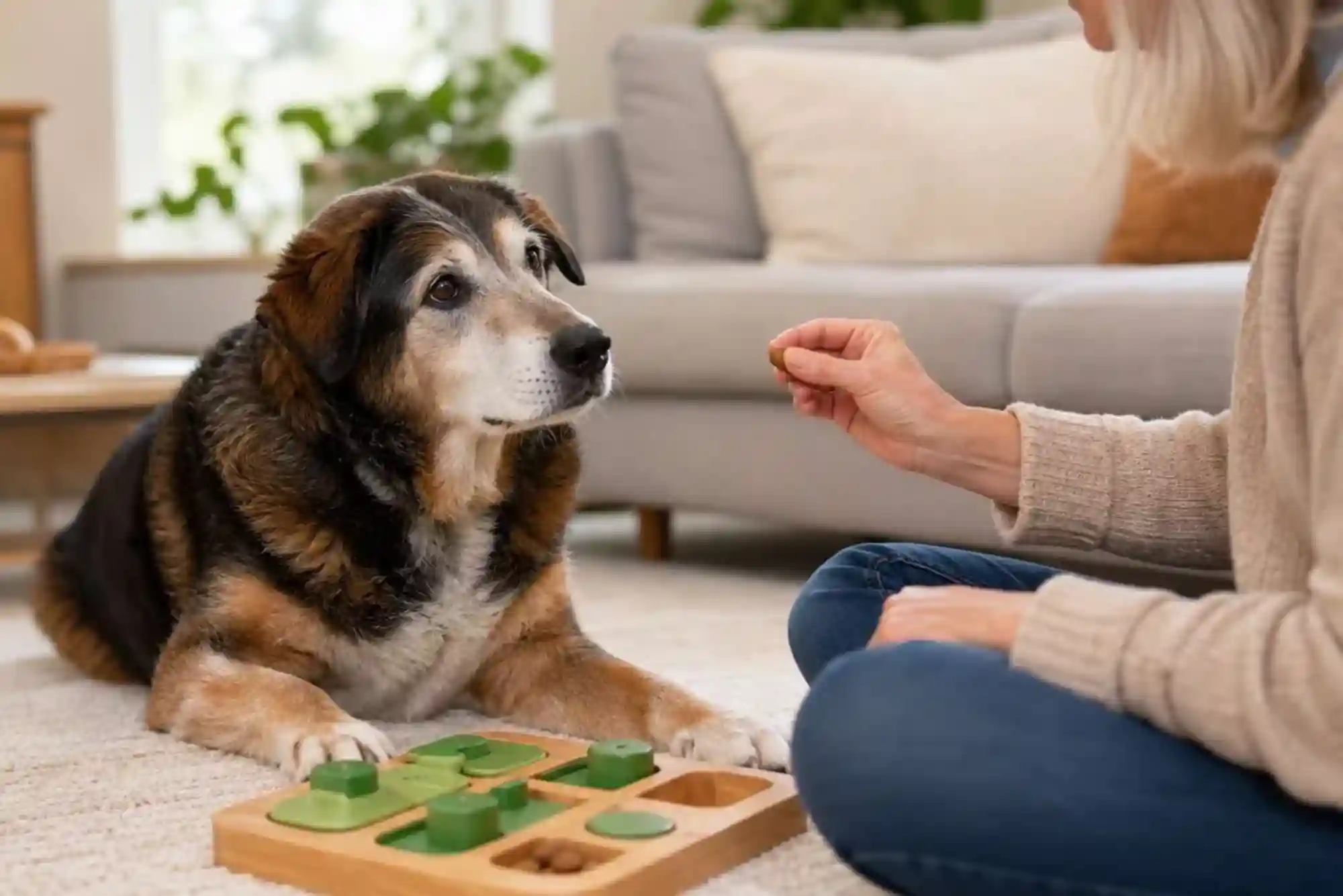
Mental enrichment should match your dog’s physical abilities. Food puzzles, scent games, and familiar training exercises can provide gentle challenges without overwhelming them.
However, stop activities if your dog appears tired, distressed, or uncomfortable. Dogs with arthritis or other medical conditions may require modified exercise plans.
Support Healthy Nutrition
Balanced nutrition is important throughout a dog’s life, especially during the senior years. Some veterinary diets contain nutrients and antioxidants designed to support aging dogs.
Certain dietary approaches may help selected dogs with cognitive dysfunction. However, no food or supplement can guarantee prevention or reversal of dementia.
Discuss dietary changes with your veterinarian before introducing supplements. This is particularly important if your dog takes medication or has kidney, liver, or digestive problems.
Veterinary Treatment for Canine Cognitive Dysfunction
Veterinary care plays an important role in managing Canine Cognitive Dysfunction. Although treatment cannot reverse established brain degeneration, it may reduce certain symptoms and improve comfort.
Your veterinarian will review your dog’s medical history, behavioral changes, sleep patterns, and physical condition. Blood tests and other examinations may help identify medical problems that resemble cognitive dysfunction.
Treatment depends on the individual dog’s needs. In some cases, a veterinarian may recommend prescription medication, a therapeutic diet, or selected supplements.
Selegiline is one medication used to manage canine cognitive dysfunction in some countries. Its suitability depends on the dog’s health, other medications, and veterinary assessment.
Never give your dog human sleep aids or sedatives without veterinary approval. Some products can cause serious adverse effects, particularly in older animals.
When Should You Contact a Veterinarian?
Arrange an appointment if your senior dog develops persistent confusion, unusual nighttime activity, house-soiling, or noticeable personality changes.
Seek prompt veterinary advice when symptoms appear suddenly or worsen rapidly. Sudden disorientation, seizures, collapse, severe weakness, or difficulty breathing may indicate an urgent medical problem.
Early assessment helps identify treatable conditions and establishes a baseline for monitoring future changes. It also allows your veterinarian to recommend a management plan suited to your dog’s needs.
Frequently Asked Questions
What are the first signs of dementia in dogs?
Early signs may include confusion, altered sleep patterns, reduced interaction, and difficulty remembering familiar routines. Some dogs also become anxious or start having accidents indoors. A veterinarian can help distinguish cognitive dysfunction from other age-related health problems.
How do you calm a dog with dementia at night?
Maintain a predictable bedtime routine and provide a quiet, comfortable sleeping area. Offer a bathroom break before bed and use soft lighting to improve navigation. If your dog continues pacing or vocalizing, consult your veterinarian about possible pain, anxiety, or cognitive changes.
Can Canine Cognitive Dysfunction be reversed?
Canine Cognitive Dysfunction is generally progressive and cannot currently be reversed. However, veterinary treatment, environmental adjustments, appropriate nutrition, and mental enrichment may help manage symptoms. Early intervention can support comfort and daily functioning.
What is the life expectancy of a dog with cognitive dysfunction?
There is no single life expectancy for dogs with CCD. The condition progresses differently between individuals, and overall health, mobility, symptom severity, and other medical conditions influence outcomes. Many dogs can continue enjoying meaningful activities with appropriate care and monitoring.
At what age do dogs develop cognitive dysfunction?
Cognitive changes become more common as dogs enter their senior years, particularly after ten years of age. However, signs may appear earlier in some dogs. Age alone cannot confirm a diagnosis, so behavioral changes should be discussed with a veterinarian.
Conclusion
Canine Cognitive Dysfunction can change how senior dogs sleep, interact, and navigate their surroundings. Recognizing these changes early helps owners provide better support and avoid overlooking treatable medical problems.